Brainard (NE) Fire & Rescue Department needed to replace a 2000 Type 1 ambulance it was running for emergency medical services (EMS) calls, and the all-volunteer department finally saved enough money to pay for a new rig.
Brainard Fire & Rescue covers 66 square miles of the Brainard Rural Fire District and part of another district for EMS, from one station with 26 volunteer firefighter/emergency medical technicians (EMT) and three fire cadets. the department currently runs one engine with a 1,000-gallon-per-minute (gpm) pump and 750-gallon water tank; a pumper tanker with a 1,000-gpm pump, 2,500-gallon water tank, and compressed air foam system (CAFS); a 3,000-gallon tanker; two brush trucks; an equipment truck; and one ambulance.
Sara Hofpar, Brainard Fire’s EMS captain, says two neighboring departments had American Emergency Vehicles (AEV) ambulances and spoke highly of them. “We looked at a couple of other ambulances that were offered, but they weren’t exactly what we were looking for,” she says. “But we liked the AEV rigs that David City and Rising City had, so we took their specs and tweaked them together to develop our own AEV spec.”
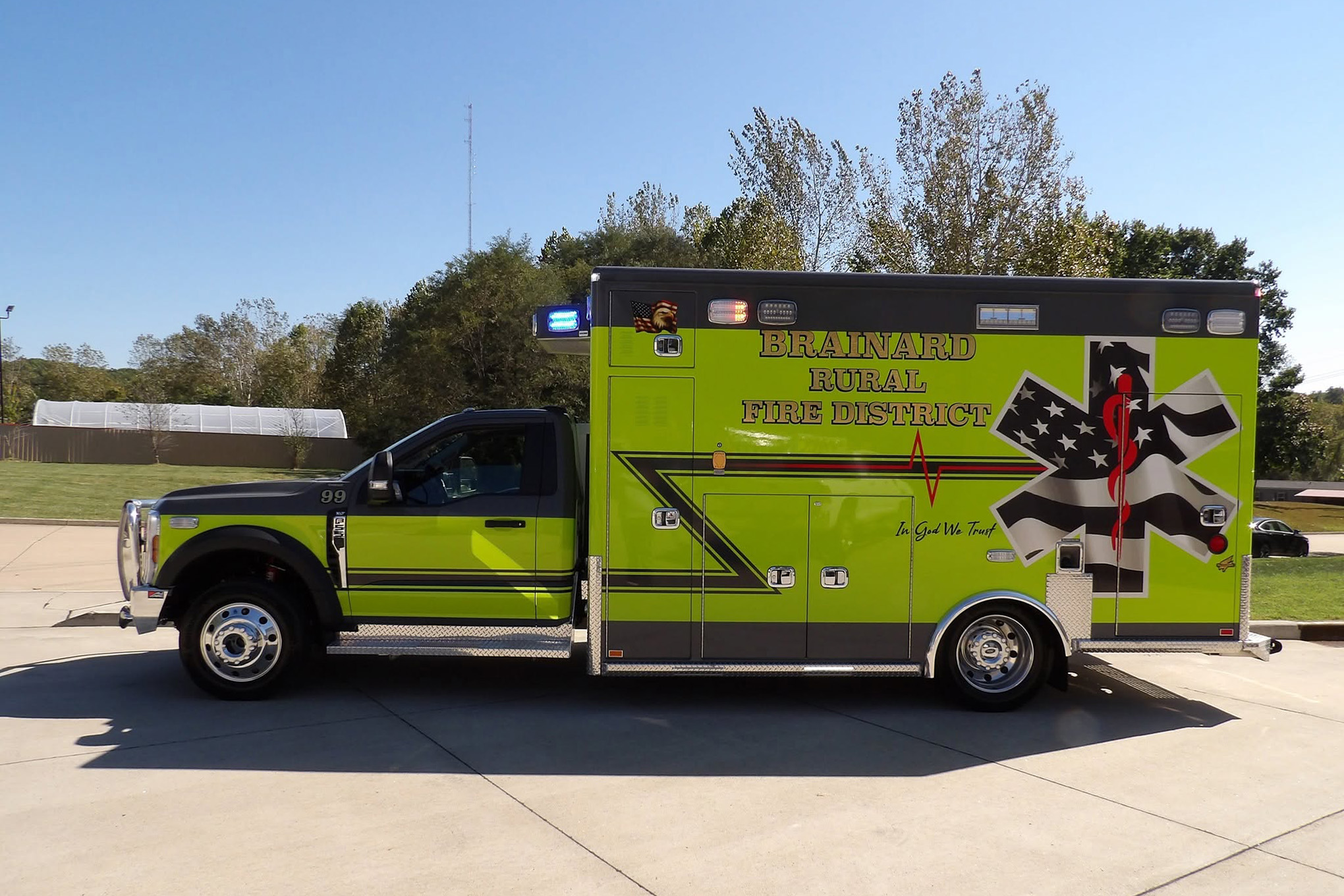
AEV built this Type 1 ambulance on a Ford F-550 two-door cab and 4×4 Super Duty chassis for the Brainard (NE) Fire & Rescue Department. (Photos courtesy of American Emergency Vehicles.)
Tim Leitnaker, regional sales manager for American Emergency Vehicles, says that the rig that Brainard Fire & Rescue chose is an AEV Type 1 ambulance built on a Ford F-550 two-door cab and 4×4 Super Duty chassis, powered by a 7.3-liter V8 gasoline engine paired with a 10-speed TorqShift® automatic transmission. The rig has a patient module that’s 172 inches long and 96 inches wide with 74 inches of headroom, and a 6-inch drop skirt on both sides of the body.
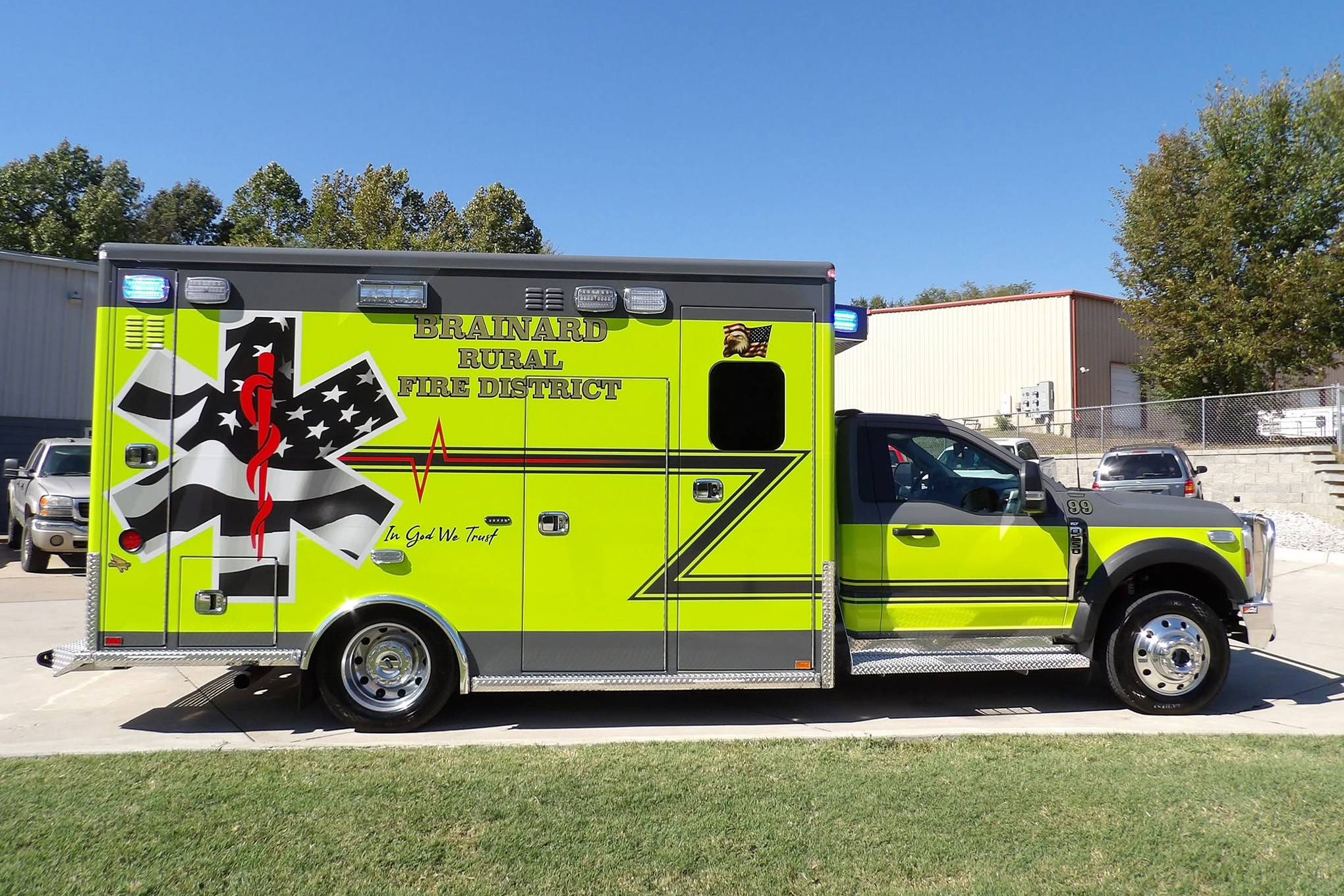
Brainard chose a door-forward design for their Type 1, along with privacy windows, to give greater privacy to the patient and medics working inside the box.
Hofpar points out that Brainard Fire & Rescue chose a door-forward design for the curbside door to give greater privacy to the patient and medics working inside the box, and added privacy windows in the side and front of the patient box. The department also went with a gasoline engine instead of the diesel model because the department didn’t want to deal with the diesel exhaust fluid (DEF) issues found on diesel engines, she adds.
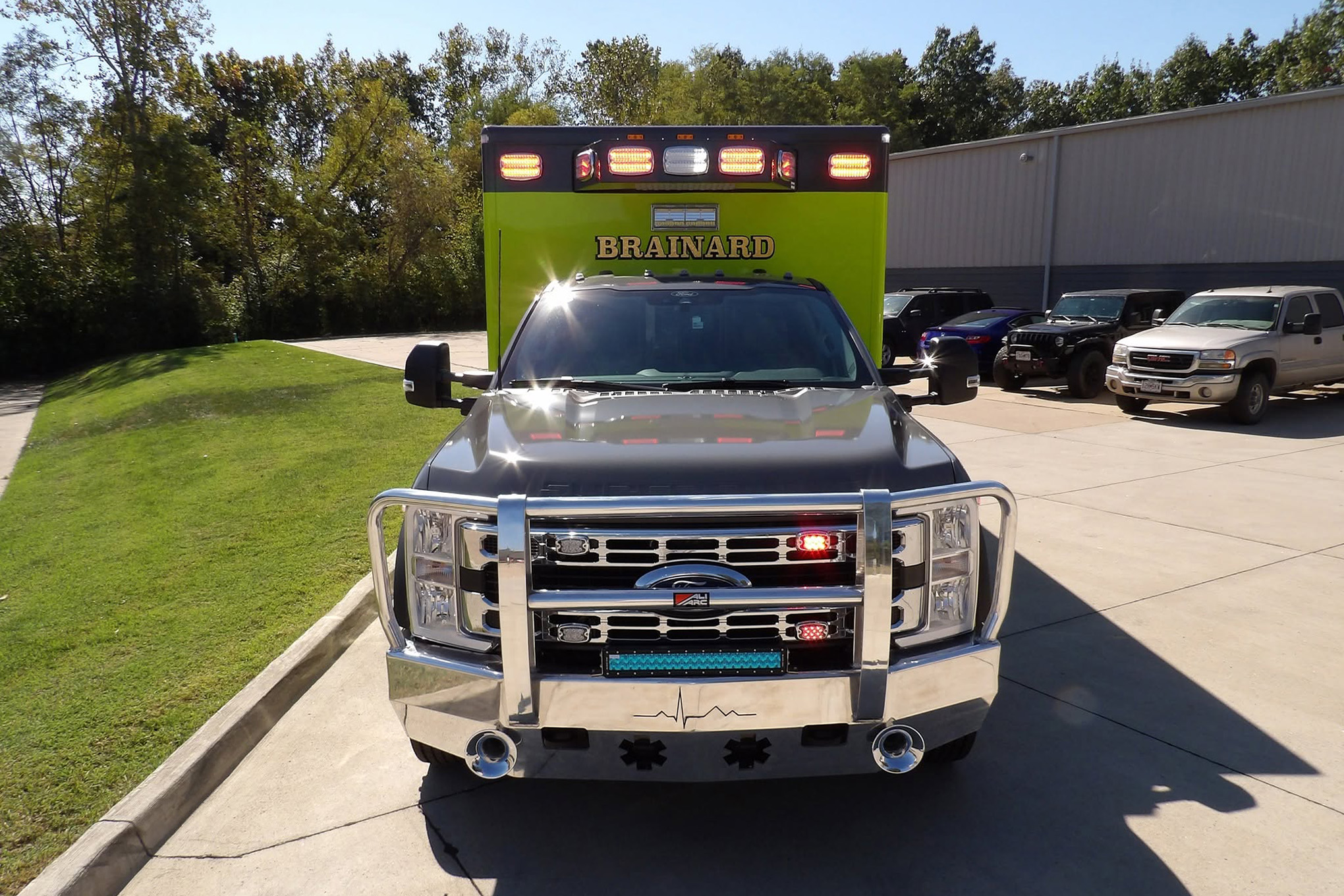
The AEV Type 1 for Brainard is powered by a 7.3-liter V8 gasoline engine, paired with a 10-speed TorqShift automatic transmission.
“We made sure we had plenty of cabinet space inside the patient module, something that our previous ambulance lacked,” Hofpar says, “and went for very clean counters except for a bracket for our LIFEPAK defibrillator and monitor.” The department also put a Zico oxygen bottle lift in the first compartment on the left side behind the driver’s position, and installed “our usual Stryker Power-LOAD and Power-PRO XT cot,” she notes.
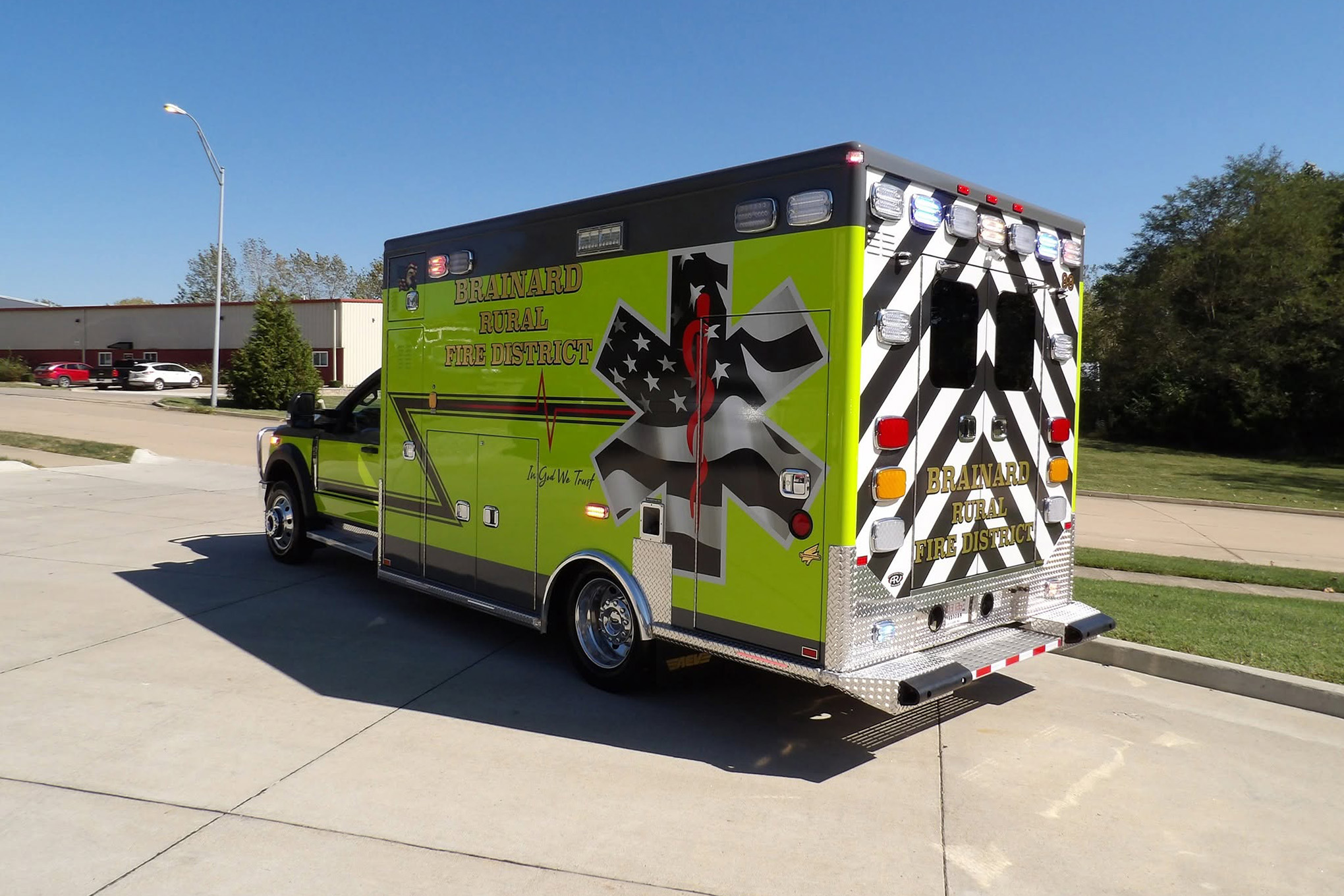
Lighting on the Brainard Type 1 includes Whelen LED M6, M7, and M9 emergency and scene lighting, and all-LED compartment and step lighting.
Leitnaker adds that the interior of the box has dual squad bench seating, which gives the department a secondary patient capability if the need arises. The two squad bench seats, attendant seat and CPR seat are all protected by Per4Max four-point harnesses.
He says that the rig has a Vanner LifeSine 1100 inverter/charger, a Whelen Howler™ siren, a Federal Signal speaker, and two Buell air horns, while lighting on the Brainard Type 1 includes Whelen LED M6, M7, and M9 emergency and scene lighting, and all-LED compartment and step lighting.
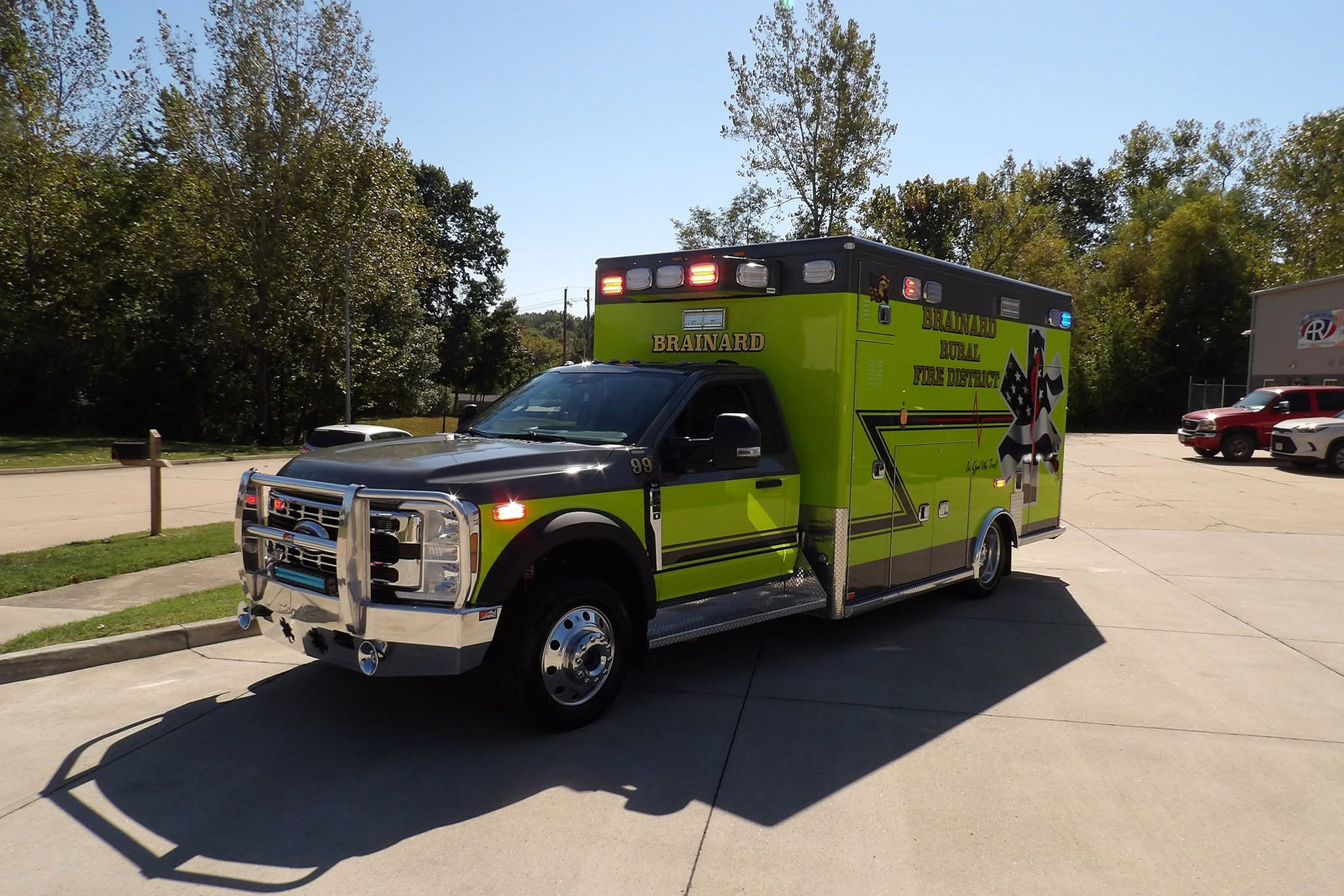
The rig has a Zico oxygen tank lift in the first compartment on the left side.
ALAN M. PETRILLO is a Tucson, Arizona-based journalist who has served as a newspaper reporter, editor, and magazine writer and is a member of the Fire Apparatus & Emergency Equipment Advisory Board. He served 22 years with the Verdoy (NY) Fire Department, including in the position of chief.