By Alan M. Petrillo
Deaconess EMS LLC provides advanced life support (ALS) and basic life support (BLS) emergency medical services (EMS) across multiple regions, including Western Kentucky, Southern Illinois, and Southern Indiana. The organization employs 189 paramedics and emergency medical technicians (EMTs) who staff up to 35 ambulances, three quick response vehicles (QRVs) and one mass casualty medical unit (Mobile Disaster Trailer) to deliver timely and comprehensive emergency response in its extensive service area.
James Ivy, Deaconess EMS service line manager, says the agency had two ambulances in one of its Kentucky locations that had reached the end of their useful lives and needed to be replaced. “We developed specs in what we wanted in new ambulances and sent them to different vendors, and after receiving their responses, decided to go with two new ambulances built by American Emergency Vehicles (AEV) and sold by American Response Vehicles (ARV),” Ivy says.
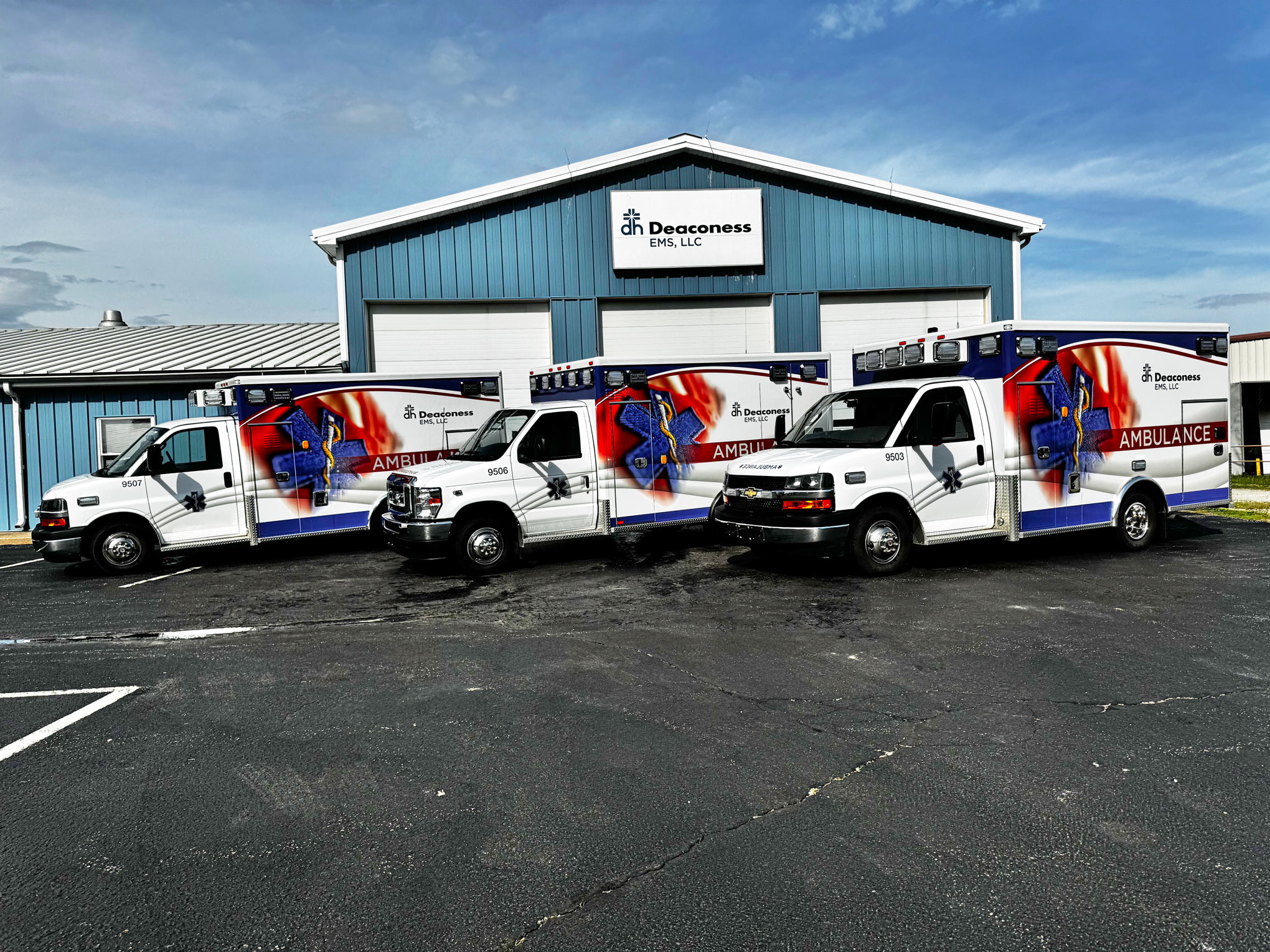
Two new AEV Type 3 rigs have 95-inches-wide and 150-inches-long patient modules with 3 inches of body drop and 68 inches of headroom.
Rick Driskill, regional sales manager for ARV, who sold the rigs to Deaconess EMS LLC, says the identical Type 3 ambulances are built on a Chevy 3500 two-door cab and chassis, with a walk-through into the 150-inch-long patient box with three inches of body drop that’s 95-inches-wide and has 68-inches-long of headroom.
Driskill notes that the rigs have 6.6-liter gasoline engines, aluminum wheels, running boards, custom center consoles, dual tone Whelen electronic sirens, Arctic Wedge™ condensers, Kussmaul 20-amp auto eject shoreline connections, and Vanner LifeSine inverters.
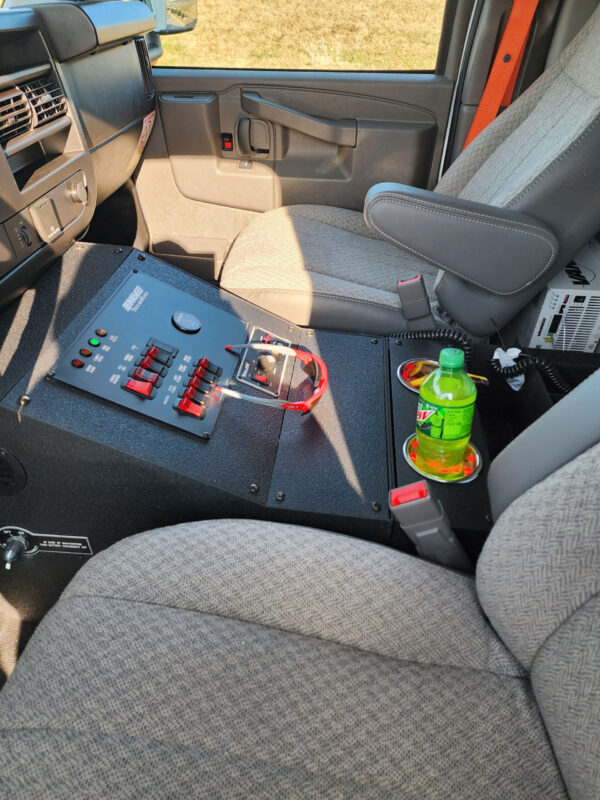
The custom center console in one of the new ambulances.
Ivy points out that when putting together the package on the two ambulances, ARV offered Deaconess EMS LLC the option of an upgraded insulation package and an ActivTek air purification system in the patient module, which Deaconess EMS LLC accepted and had installed in both rigs.
Driskill says the interior of the two Type 3 ambulances have dual seats in the squad bench area with storage underneath, CPR seats on the streetside wall, and attendant seats with integrated child safety seats at the head of the cots, which is locked in by Stryker PowerLOAD fittings. He adds that all seating positions are secured by Per4Max four-point harnesses.
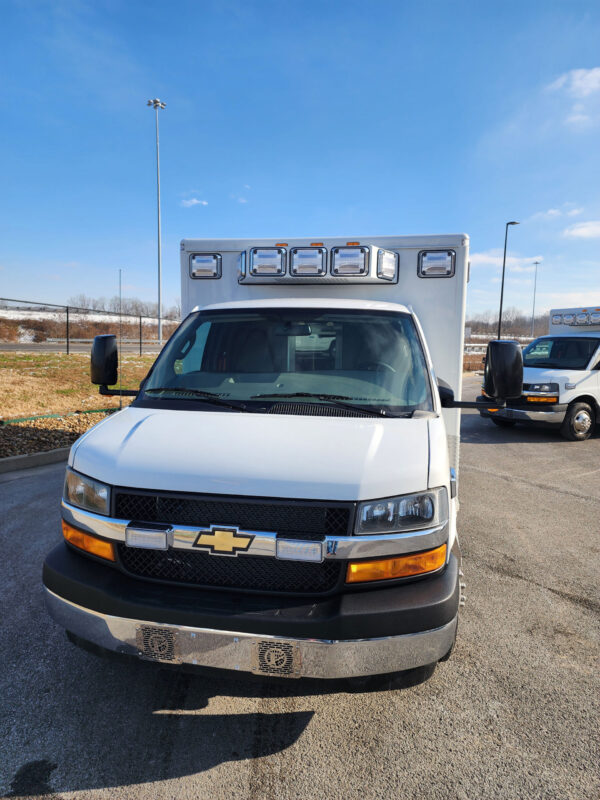
The ambulances have AEV’s Arctic Wedge condenser at the top-front of the patient module.
On the rear curbside wall of the patient box is a cabinet with space for four sizes of medical gloves, Driskill says, and above the rear doors are a turn/stop indicator and a digital clock. On the streetside wall of the action area between the CPR and attendant seats are two oxygen outlets, switch panels, portable suction gauges, digital thermometers, oxygen tank gauges, 12-volt outlets, and USB connection ports.
Driskill says the rigs have Whelen 900 series LED emergency lighting, Whelen 900 series LED flood/scene lights, and DayBrite interior cabinet lighting.
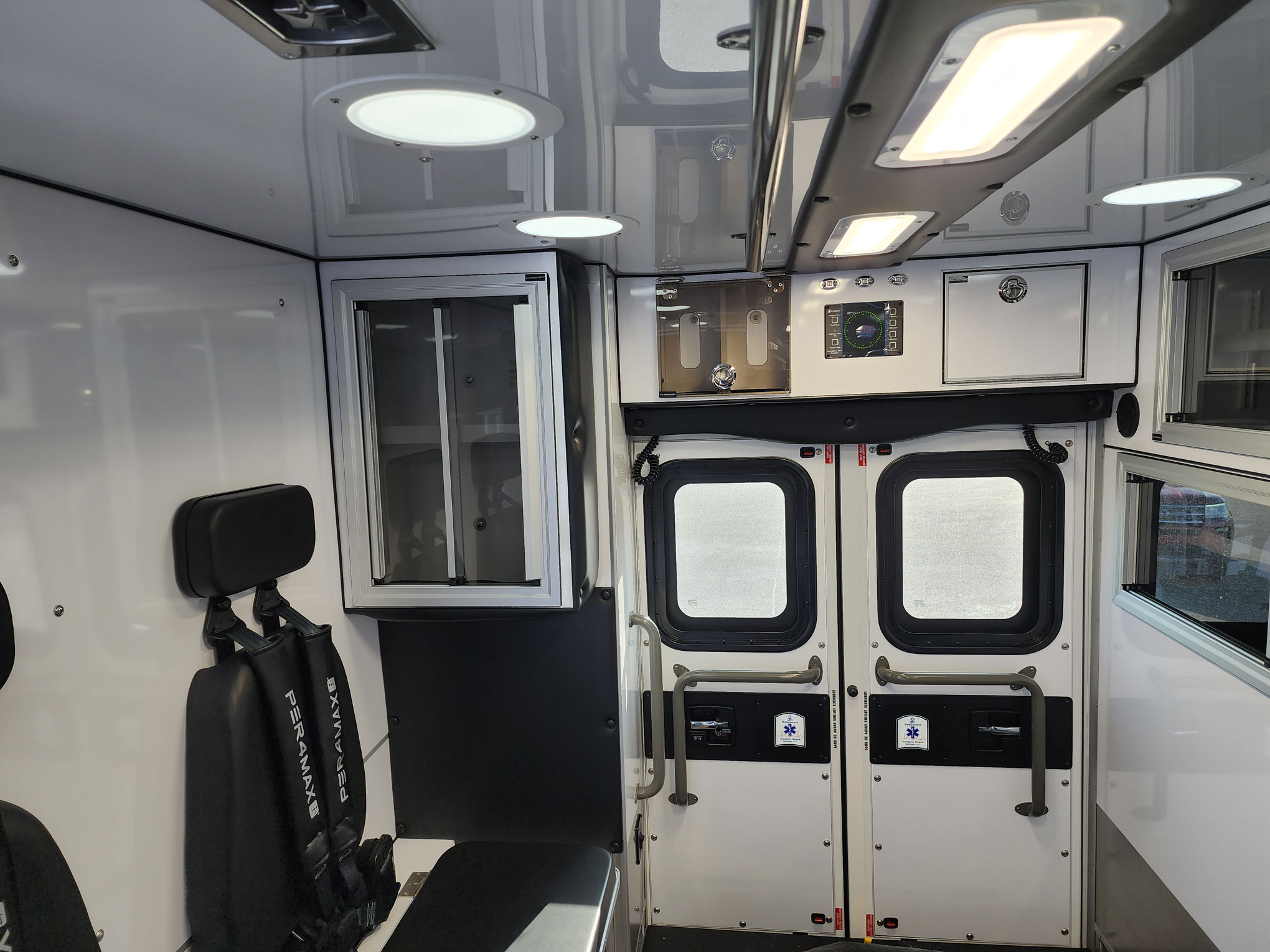
All four seating positions inside the patient module are protected by Per4Max four-point safety harnesses.
ALAN M. PETRILLO is a Tucson, Arizona-based journalist, the author of three novels and five nonfiction books, and a member of the Fire Apparatus & Emergency Equipment Editorial Advisory Board. He served 22 years with the Verdoy (NY) Fire Department, including in the position of chief.